How to Homeschool in French (Even If You Don’t Speak French)
How to Homeschool in French (Even If You Don’t Speak French)
Yes, it’s possible... and it’s probably easier than you think!
If you’re curious about homeschooling in French but immediately think, “That sounds great… except I don’t speak French,” you’re not alone.
This is one of the most common concerns parents have when they start exploring French homeschooling… and the good news is this:
You do not need to speak French to homeschool in French.
What you do need is a realistic understanding of how young children learn languages, and a setup that supports both your child and you as the parent.
Let’s walk through what actually matters.
Can You Really Homeschool in French If You Don’t Speak It?
Yes, and many families already do!
When children learn a second language in early childhood, they are not learning it the way adults do. They are not translating, analysing grammar, or memorizing rules. Instead, they learn through:
– repetition – context – play – songs and movement – everyday routines
Your role as a parent is not to be the French expert in the room. Your role is to create consistent exposure in a low-pressure, positive environment.
Children don’t need perfect French models. They need access to the language and permission to explore it.
What Matters More Than Fluency When Homeschooling in French
Many parents assume fluency is the most important factor when homeschooling in French.
In reality, these things matter far more:
– consistency over intensity – confidence over “correctness” – play over pressure – routine over perfection
Trying to “teach” French without support often leads to frustration, for both parent and child. On the other hand, children thrive when French is presented as something fun, predictable, and emotionally safe.
This is why random apps, flashcards, or worksheets often fall flat.
Without structure and context, kids disengage and parents lose confidence.
How Young Children Actually Learn a Second Language
Young children learn languages best when they can experience them.
That means:
– singing songs – playing games – moving their bodies – listening to stories – exploring real-world concepts (like science, nature, and math) in the language
Language learning at this age works best when French is woven into meaningful activities, rather than treated as a separate “subject.”
This approach helps children associate French with curiosity and enjoyment; not performance or pressure.
What to Look for in a French Homeschool Curriculum
If you’re searching for a French homeschool curriculum, especially as a non-French-speaking parent, here are a few key things to look for:
1. A clear progression so you’re not guessing what comes next 2. Play-based activities rather than textbook-style lessons 3. Short, flexible lessons that fit real family life 4. Guidance for parents, including translations or pronunciation support 5. Opportunities to learn French through multiple subjects, not just vocabulary lists
A strong French homeschool curriculum should make you feel supported, not overwhelmed.
What Homeschooling in French Can Look Like at Home
French homeschooling doesn’t need to look like hours at a table.
For many families, it looks more like:
– a short video or song in French – a simple hands-on activity or worksheet – a few minutes of repetition throughout the day – revisiting familiar songs or routines over time
Most families find that 20–30 minutes a day is more than enough, especially when learning is fun and consistent.
A Great Option for Parents Who Want More Structure
Some families enjoy piecing together their own French resources. Others prefer having everything laid out for them.
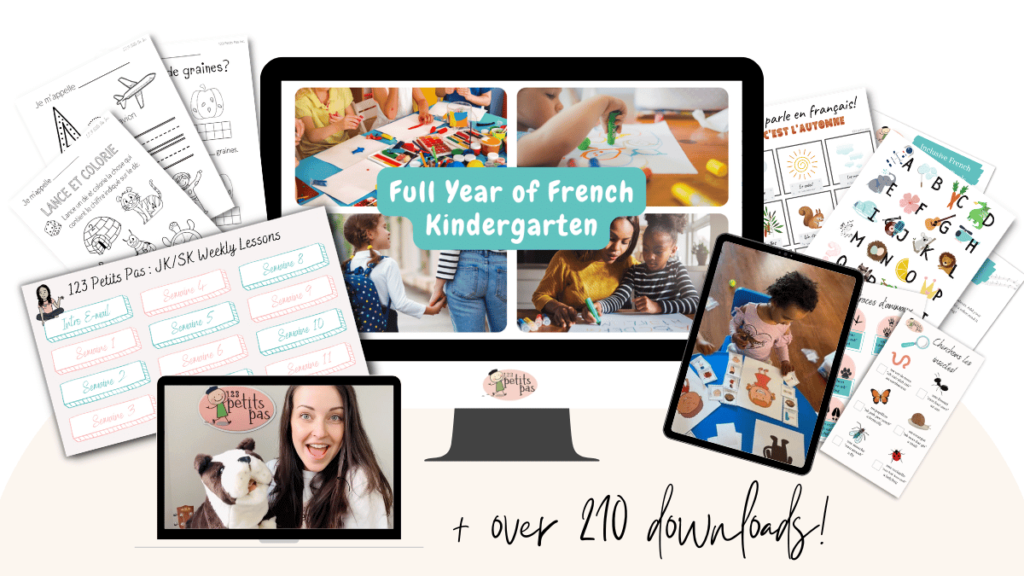
If you’re looking for a ready-made French homeschool curriculum designed specifically for parents who don’t speak French, The Full Year of French Kindergarten Program by 123 Petits Pas is one option many families choose.
It’s a play-based, step-by-step program for children ages 3.5-7 that provides:
✔ 90+ guided French video lessons
✔ weekly learning plans
✔ 210+ hands-on activities and worksheets
✔ parent support, including translations and pronunciation guidance
The goal is to remove the guesswork so families can focus on learning together.
Final Thoughts: You Don’t Need to Be Fluent to Begin
Homeschooling in French doesn’t require perfect pronunciation, advanced grammar knowledge, or a teaching background.
It starts with small, consistent moments and the willingness to learn alongside your child.
Your child doesn’t need a fluent French-speaking parent.
They need a supportive one.
And with the right approach and resources, homeschooling in French can become a natural, enjoyable part of your family’s routine, one petit pas (little step) at a time.
Looking for a structured French homeschool curriculum?
If you’ve read this and found yourself thinking, “I want to do this, but I’d love a bit more structure,” you’re not alone.
Some families choose to piece together their own resources. Others prefer having everything laid out step by step. It’s the exact reason we created our Full Year of French Kindergarten Program– to create an all-inclusive, step-by-step, supportive program for English parents wishing to homeschool their children in French.